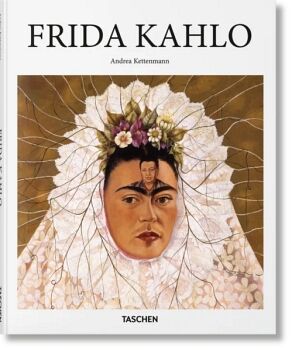
The arresting pictures ofFrida Kahlo(1907 54) were in many ways expressions of trauma. Through a near-fatal road accident at the age of 18, failing health, a turbulent marriage, miscarriage and childlessness, shetransformed the afflictions into revolutionary art.In literal or metaphorical self-portraiture, Kahlo looks out at the viewer with an audacious glare, rejecting her destiny as a passive victim and rather intertwining expressions of her experience into ahybrid real-surreal language of living: hair, roots, veins, vines, tendrils and fallopian tubes. Many of her works also explore theCommunist political idealswhich Kahlo shared with her husband Diego Rivera. The artist described her paintings asthe most sincere and real thing that I could do in order to express what I felt inside and outside of myself.This book introduces the rich body of Kahlo s work to explore her unremitting determination as an artist, and her significance as a painter, feminist icon, and a pioneer of Latin American culture.