
 MID-TERM ASSESSMENT OF PROGRESS ON THE 2015 STRATEGIC VISION FOR ANTARCTIC AND SOUTHERN OCEAN RESEARCH
MID-TERM ASSESSMENT OF PROGRESS ON THE 2015 STRATEGIC VISION FOR ANTARCTIC AND SOUTHERN OCEAN RESEARCH
MID-TERM ASSESSMENT OF PROGRESS ON THE 2015 STRATEGIC VISION FOR ANTARCTIC AND SOUTHERN OCEAN RESEARCH
 Impresión bajo demanda
AA.VV
Tiempo de despacho de pedidos es de 15 a 20 días hábiles, una vez confirmado el pago del pedido.
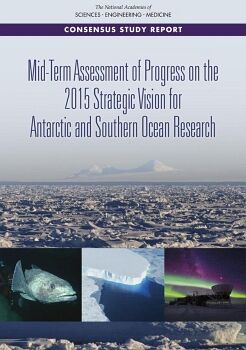
The Antarctic's unique environment and position on the globe make it a prime location to gain insights into how Earth and the universe operate. This report assesses National Science Foundation (NSF)progress in addressing three priority research areas identified in a 2015 National Academies report: (1) understanding the linkages between ice sheets and sea-level rise, including both a focus on current rates of ice sheet change and studies of past major ice sheet retreat episodes; (2) understanding biological adaptations to the extreme and changing Antarctic environment; and (3) establishing a next-generation cosmic microwave background (CMB) program, partly located in Antarctica, to study the origins of the universe. NSF has made important progress understanding the impacts of current ice sheet change, particularly through studies focused on the ice sheet and ocean interactions driving ongoing ice mass loss at the Thwaites Glacier and Amundsen Sea region in West Antarctica.Less progress has been made on studies of past major ice sheet retreat episodes.Progress is also strong on CMB research to understand the origins of the universe.Progress has lagged on understanding biological adaptations, in part because of limited community organization and collaboration toward the priority. To accelerate progress during the second half of the initiative, NSF could issue specific calls for proposals, develop strategies to foster collaborations and partnerships, and commission a transparent review of logistical capacity to help illuminate strategies and priorities for addressing resource constraints. Such efforts would also help optimize science and proposal development in an environment of inherently constrained logistics.
 Impresión bajo demanda
 Impresión bajo demanda
 Impresión bajo demanda
 Impresión bajo demanda
 Impresión bajo demanda
 Impresión bajo demanda